Step 1
Community engagement
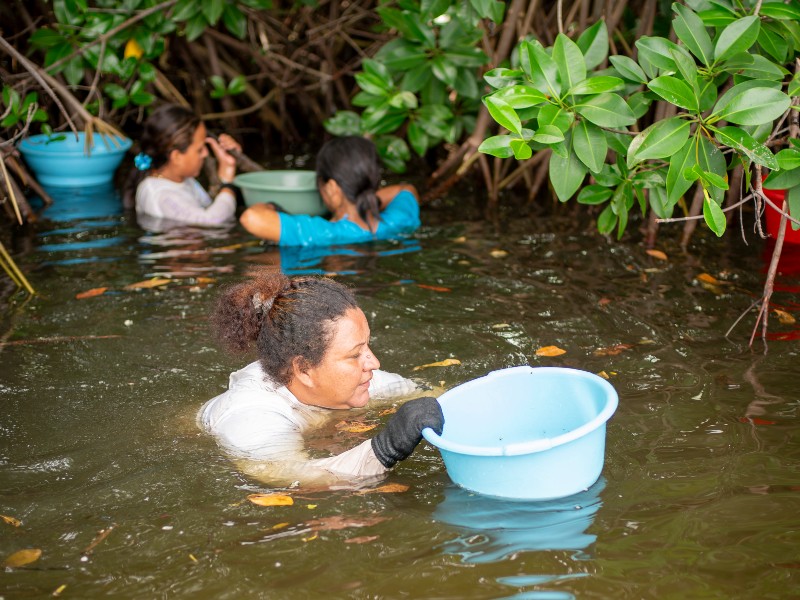
The project starts with direct involvement of coastal communities and groups of women fishers, building relationships based on trust, respect, and recognising life stories and local knowledge.

The project starts with direct involvement of coastal communities and groups of women fishers, building relationships based on trust, respect, and recognising life stories and local knowledge.
Research, monitoring, and training activities are co-created with communities, ensuring they respond to local needs, contexts, and dynamics.
Monitoring activities, workshops, field trips, and educational processes take place, integrating science, local knowledge, and active participation from women fishers and university students.
The data and lessons learned are analysed and communicated through science communication products, reports, and exchange spaces accessible to diverse audiences.
Results and lessons learned are shared through networks, partnerships, and advocacy spaces to strengthen decision-making and broaden the project’s impact.